La Roulotte à Mag
A direct ordering site for a small restaurant, and the lightweight dashboard the restaurant would run its orders, menu and opening hours from.
Order 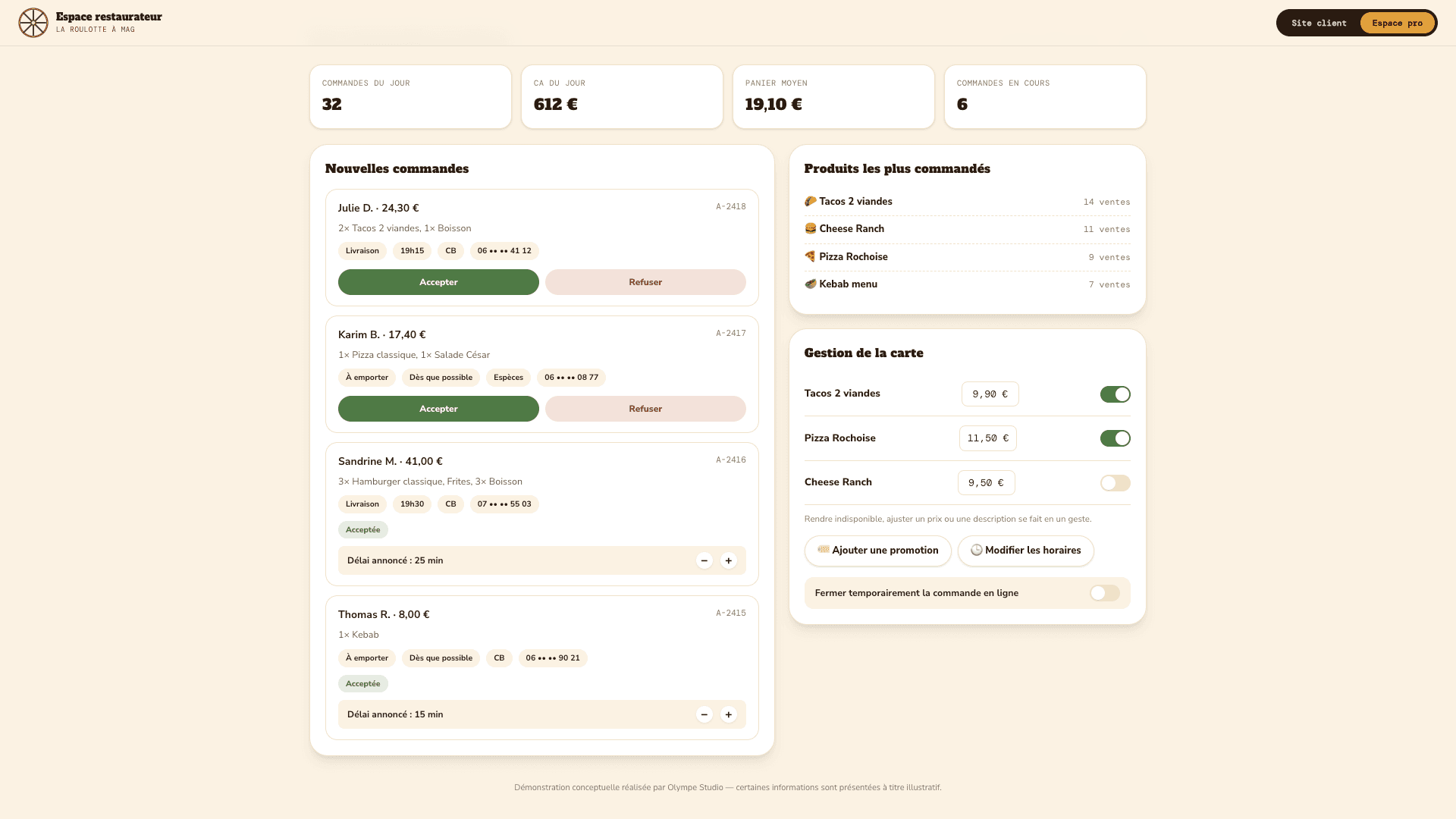
Manage
Overview
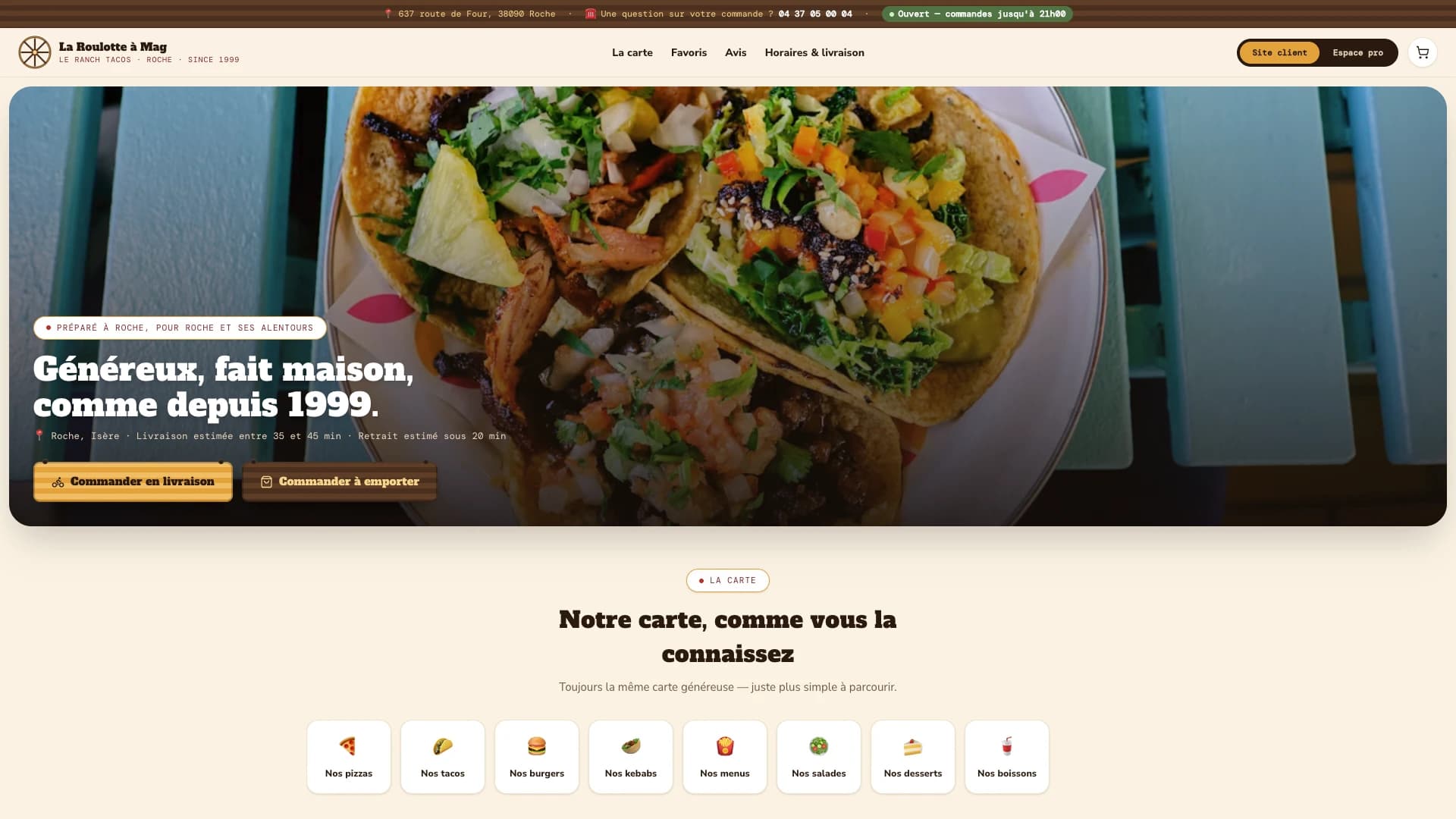
La Roulotte à Mag is a restaurant in Roche, in Isère. I built a conceptual demo of what its own ordering tool could be: customers browse the menu by category and order for delivery or takeaway from their phone; the restaurant receives the orders, accepts or declines them, adjusts the announced wait time and manages its menu. A switch in the header moves between the customer site and the restaurant side. The orders and figures shown are illustrative.
Problem
Orders were taken by hand, and the big delivery platforms are a heavy answer for a small restaurant. The question was what its own ordering flow could look like — and how simple handling what comes in could be.
What I built
- Customer side: the menu by category, delivery or takeaway, opening hours and practical information, and the basket.
- Restaurant side: today's orders, revenue and average basket, orders in progress and new orders.
- Order handling: accept or decline an order and change the announced wait time.
- Menu management: product availability, prices, promotions, opening hours, and pausing online orders temporarily.
- An overview of the most ordered products.
Technical decisions
Design the whole workflow, not just the storefront
A customer orders → the restaurant receives it → accepts it and sets a wait time → keeps the menu and availability up to date. Designing both ends together is what turns an ordering page into a tool a restaurant could actually run service with.
Controls for a busy service
Marking a product as unavailable, changing a price or pausing online orders has to be quick in the middle of a rush, so those controls sit on the dashboard next to the orders instead of in a settings page.
Kept small on purpose
A small restaurant doesn't need a full e-commerce platform. It's a React single-page app built with Vite, TypeScript and Tailwind CSS v4, with Zustand for state and Framer Motion for transitions.