Noma
One product for people who run several holiday rentals: a direct-booking site for guests, and the dashboard the manager runs the properties from.
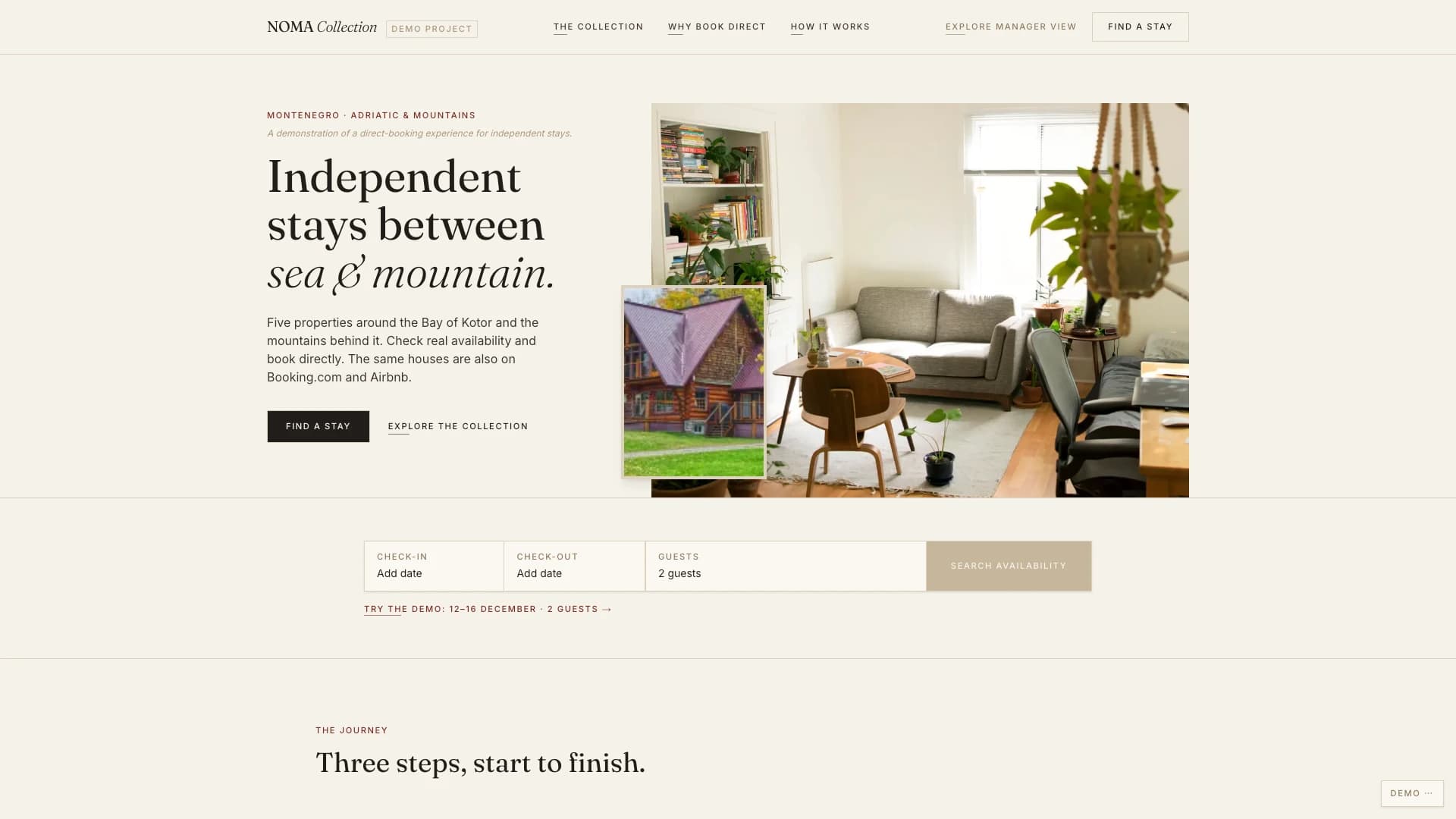
Booking experience 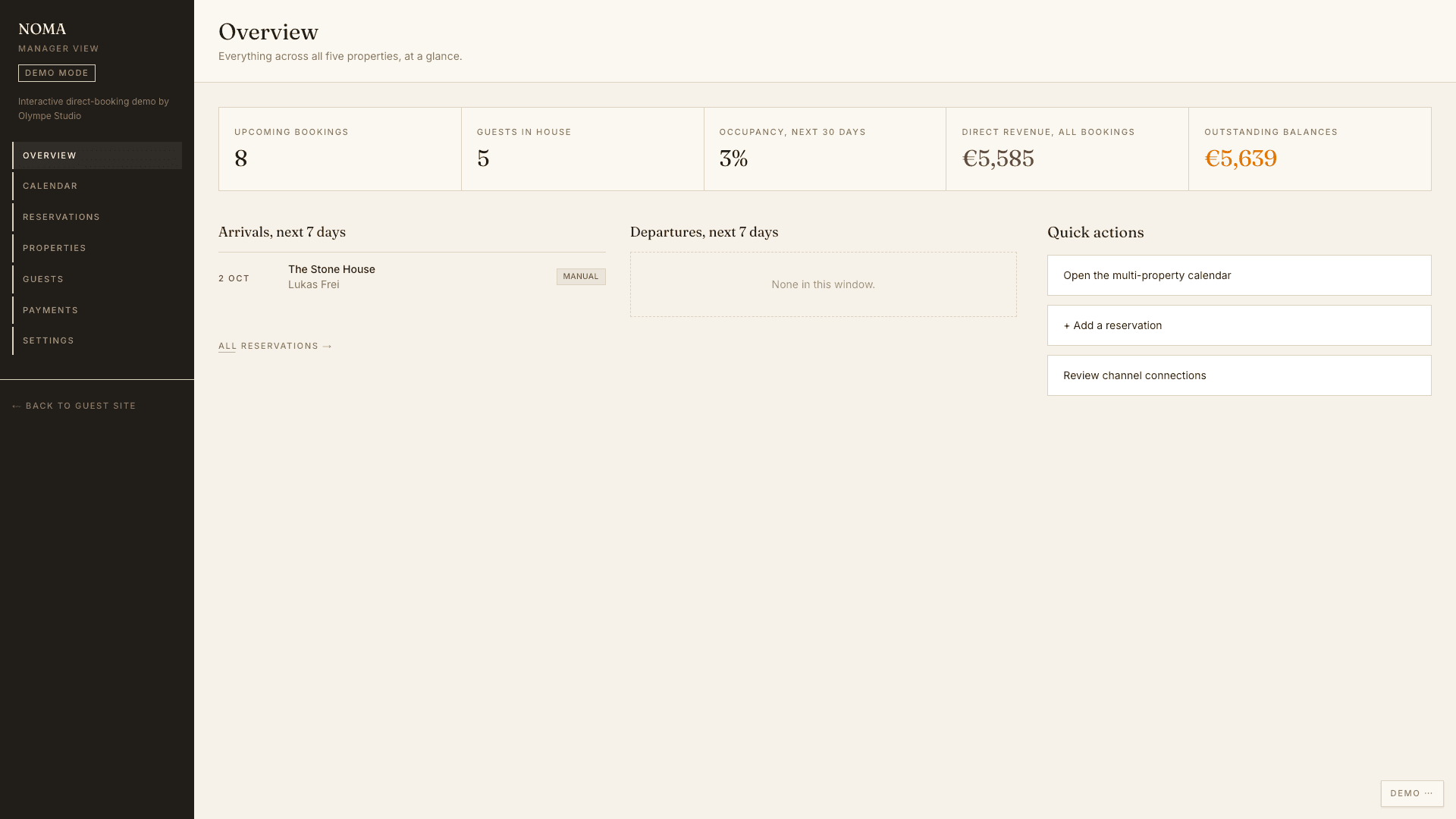
Operations
Overview
Noma is a demo platform for owners and managers of several seasonal rentals, staged as a fictional collection of five houses around the Bay of Kotor in Montenegro. Guests browse the collection, search by dates and number of guests, check availability and book directly. The manager works from a dashboard with bookings, occupancy, revenue and payments. Both sides are the same product: “Explore manager view” and “Back to guest site” link them directly.
Problem
Owners usually have a showcase site and depend on Booking.com or Airbnb for the rest. I wanted to show them their own site could take direct bookings and be the tool they manage from every day.
What I built
- Guest side: a collection of properties, search by dates and number of guests, availability, direct booking, and a clear case for booking direct rather than through the big platforms.
- Manager side: a dashboard with upcoming bookings, guests in house, occupancy, revenue, outstanding balances, arrivals and departures.
- Back-office sections for the calendar, bookings, properties, guests, payments and settings.
- Channel connections to platforms like Airbnb and Booking.com are simulated in the demo — they aren't real integrations.
Technical decisions
One product, two interfaces
The guest site and the manager dashboard are designed as one product over the same model — properties, availability, bookings, guests, payments — rather than a website plus a separate back office bolted on later.
Properties as data, not pages
Each rental is an entry, not a page coded by hand. Going from three properties to ten doesn't touch the interface, and search, availability and occupancy are thought of across the whole collection.
Two very different jobs
The guest side has to sell and lead to a booking. The manager side has to show the day at a glance: numbers, lists, arrivals and departures. Same data, very different interfaces.